


Difference Between an Isolation Transformer and a Step Down Transformer
- Mohnish Mehra

- 6 days ago
- 3 min read
Transformers have a big effect on electrical devices and how power is distributed in the world. They are responsible for converting alternating current (AC) to direct current (DC). Transformers can be used as converters to step down voltage or provide isolation. Indian manufacturers are primarily involved in manufacturing isolation transformers and step-down transformers.
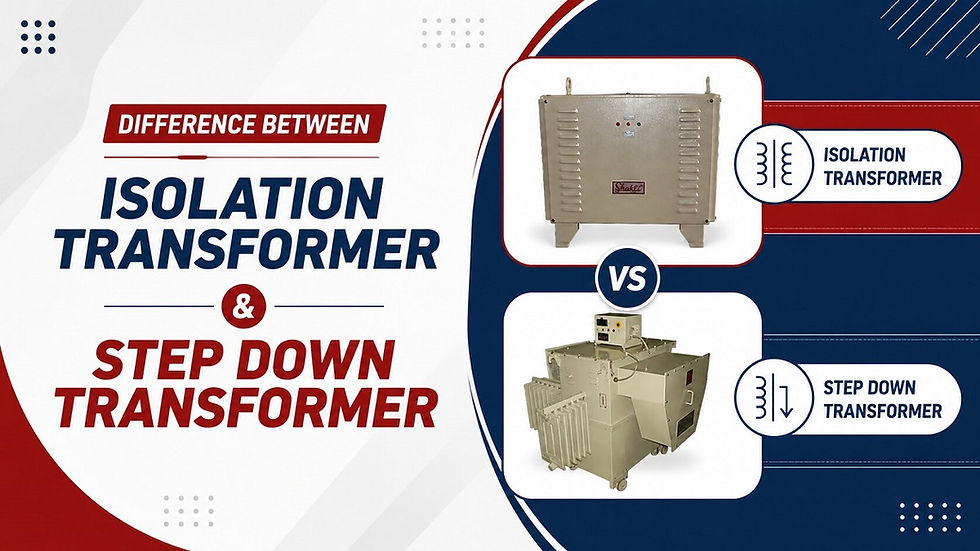
We are delving into the fascinating world of transformers and exploring the benefits of, as well as the differences between, step-down and isolation transformers. You might think they're pretty similar, but hold on tight as we navigate through the details and shed light on their unique perks. Let's jump right in!
Isolation Transformers
An isolation transformer takes in a smaller amount of voltage and step-ups it so that high voltages can still be reached without damaging sensitive electronic components such as computers, cellphones, or medical devices.
You have some delicate equipment that needs protection from the power supply chaos. Enter isolation transformers, the ultimate protectors! These superheroes make sure there's no direct electrical connection between the input and output winding.
Isolation transformer manufacturer design separate primary and secondary winding. They're like best friends magnetically coupled but electrically isolated. It's like keeping your favorite snacks just a fingertip away but safe from any contamination!
Benefits:
1. Enhanced Safety: With the isolation between the input and output winding, you're shielded from nasty electric shocks and equipment damage. It's like having an electrical force field.
2. Noise Reduction: Isolation transformers are experts at squashing electrical noise, harmonics, and electromagnetic interference. Say goodbye to irritating buzzing sounds and hello to a cleaner power supply!
3. Ground Fault Protection: No need to worry about ground faults and current leakage. These transformers have got your back, making sure you stay grounded in safety.
Step-Down Transformers
Step-down transformers take in large amounts of voltage and are utilized to reduce the amount of power being sent to one point by stepping the voltage down.
Imagine you've got high-voltage power knocking on your door, but your appliances only speak low voltage. Fear not! Step-down transformers come to the rescue. They take that high voltage from the primary winding and transform it into a lower, more compatible voltage for your specific needs.
Just like their isolation counterparts, step-down transformers have separate primary and secondary winding. But here's the twist: the secondary winding has fewer turns, resulting in a magical lower voltage output. It's like having your personal voltage wizard!
Benefits:
1. Voltage Adaptation: Need to power those low-voltage devices and appliances? Step-down transformers have got your back, ensuring compatibility with all your electrical pals.
2. Power Regulation: Want to be the master of your power supply? With adjustable turn ratios, step-down transformers let you control and regulate the electrical flow like a pro.
Conclusion
Isolation and step-down transformers might seem similar, but they each bring unique strengths to the electrical world. Isolation transformers prioritize safety and noise reduction, while step-down transformers focus on voltage conversion and power regulation. Whether you need to protect sensitive equipment from electrical interference or adapt voltage levels, these transformers are indispensable in various industries and everyday life.
In short, isolation transformers are best for protecting equipment, whereas step-down transformers serve to alter voltage levels. Armed with this information, manufacturers, businesses, and the general public can determine which booster transformers in India best suit their specific needs.

Comments